
🚚✨ FREE SHIPPING on orders $100+ | 📦 $19 flat rate under $100

Your cart

Your cart is empty

See what's hot today!

Stone 101

Scolecite

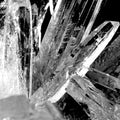
Fine white needles that fan out like frost. Grown inside old lava in India.

Scolecite grows as sprays of thin, glassy white needles, often in tufts and fans. Here you'll find one-of-a-kind specimens from India and a polished scolecite pendulum.

Colour
White to colourless
Hardness
Mohs 5 to 5.5
Found in
India, Iceland
Family
Zeolite
Chakra
Crown

Shop Scolecite by shape

6 Results

Scolecite Pendulum 6 Facets & Bead from The Rock Space

Scolecite Pendulum 6 Facets & Bead

$12.00

Unit price
per 

Scolecite from India - Unique #10 - 4" styled on a wooden table at home
Scolecite from India - Unique #10 - 4" from Stonebridge Imports

Scolecite from India - Unique #10 - 4"

$265.00

Unit price
per 

Scolecite from India - Unique #9 - 5"

$365.00

Unit price
per 

Scolecite from India - Unique #6 - 3" styled on a wooden table at home
Scolecite from India - Unique #6 - 3" from Stonebridge Imports

Scolecite from India - Unique #6 - 3"

$285.00

Unit price
per 

Scolecite from India - Unique #3 - 3 1/4" styled on a wooden table at home
Scolecite from India - Unique #3 - 3 1/4" from Stonebridge Imports

Scolecite from India - Unique #3 - 3 1/4"

$270.00

Unit price
per 

Scolecite from India - Unique #1 - 5 1/2" from The Rock Space

Scolecite from India - Unique #1 - 5 1/2"

$540.00

Unit price
per 

The basics

So what is scolecite, really?

Scolecite is a zeolite, a family of minerals with water built right into their structure. It grows in gas pockets inside basalt, a dark volcanic rock.

Most specimens come from the Deccan basalts of western India, a huge stack of ancient lava flows. Over millions of years, mineral-rich water filled the pockets and the needles grew.

Rituals, not rules

How people use it

  • Most folks set a specimen on a shelf where light can catch the needles. It's a display stone first.
  • A lot of people keep one on the nightstand as part of a quiet wind-down routine.
  • It's traditionally linked with peace and inner calm, so some keep it nearby while meditating.

These are traditions people enjoy, not promises. Pick the one you keep coming back to.

Care

Looking after your Scolecite

  • Water: keep it dry
  • Sun: fine
  • Keep it dry. Water can dull the needles and loosen the spray.
  • The needles are thin and break easily. Hold it by the base, never by the tips.
  • Dust it with a soft brush, not a cloth.

Straight talk

Real or look-alike?

Scolecite is rarely faked, but it's easy to confuse with its zeolite cousins natrolite and mesolite, which grow the same white needles. Telling them apart for sure takes lab testing. If a piece we sell were ever treated or man-made, the title would say so.

Good questions

Scolecite questions people ask us

What does scolecite mean?

It's traditionally linked with peace, calm and quiet reflection, and with the crown chakra. Most people pick it because the needles look like frost. That's a good enough reason.

Is scolecite real or fake?

Fakes are rare. Real scolecite has fine, glassy needles that radiate from a base, often on dark basalt rock. It can look like natrolite or mesolite, which are close cousins.

Can scolecite go in water?

Best not. Keep it dry and dust it with a soft brush. For a traditional cleanse, try smoke, sound or a night on selenite.

Where does scolecite come from?

Our specimens come from India, where it grows in pockets of the Deccan basalts. It's also found in Iceland and a few other volcanic regions.